

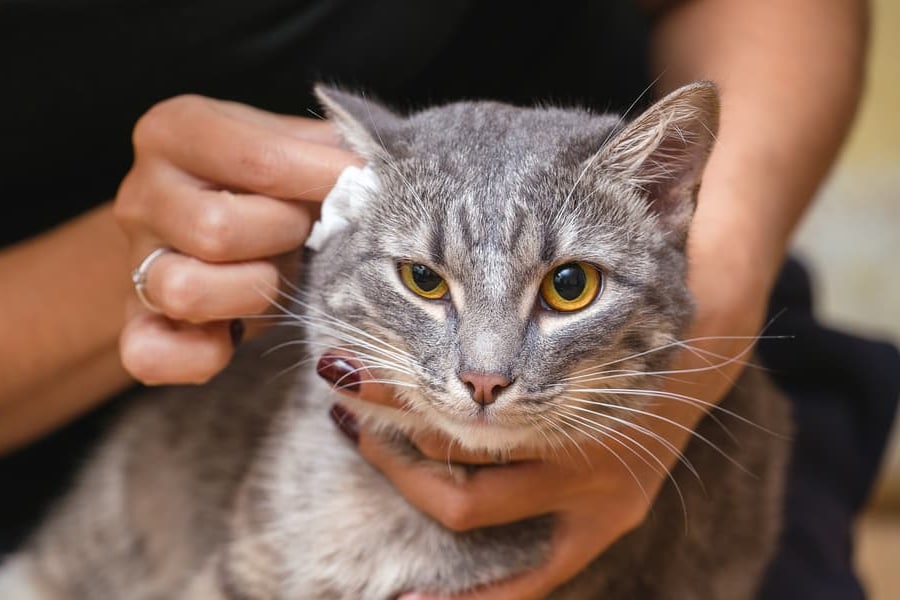
Ear Care
They should be clean, odour-free, pale pink in colour and have minimal wax present.
Generally speaking, most pets should be maintenance free in this area, however some smaller dogs, those with floppy ears and those prone to allergies will have more frequent problems.
Here are some of the common signs your pet may have ear disease
- Smelly ears
- Painful to touch
- Lots of head scratching
- Shaking or tilting head to one side
- A brown/black/yellow discharge
- Inflammation or redness
- Loss of balance
- Behaviour change (irritable, depressed)
- Dropped ears
Now what might be causing these signs?
- Otitis Externa/Ear Infection: Infection is caused by bacteria or yeast, or a combination of both. It usually causes a funky smell in the ear and often a yellowy or brownish discharge. The inside of the ear flap is usually inflamed and red, your pet will be uncomfortable and wanting to scratch. These infections are very very common in pets with skin allergy’s
- Parasites/Ear Mites: Ear mites are probably more common in cats and rabbits, but certainly seen in dogs as well. Your pet will tend to scratch and shake their head, usually there is darker debris seen in the ear
Aural Haematoma: A few of you may be familiar with these, more often seen in bigger dogs or those with floppy ears. It is basically a big blood blister that has formed by a broken blood vessel in the ear. It happens secondary to either vigorous head shaking/scratching from ear infection or from trauma (especially if you have a puppy or dog that loves to bite ears!) - Foreign bodies: Grass seeds are quite common here in NZ, if your pet has a painful or irritated ear with no real smell or discharge its possible they have something stuck in there!
- Vestibular Disease: This is generally a disease of older dogs and it will cause a head tilt
So what do you do if you suspect your pet has an ear problem?
Now this is one of those times where I wouldn’t recommend at home treatment without getting advice from your vet. It is always recommended to have your vet examine your pet’s ears thoroughly to ensure their ear drum is intact and also to recommend the best treatment. There are different medications that are used for all the different types of disease’s so this is where you need your vet’s expert advice!
A quick few do’s and don’ts:
DON’T: use any kind of ear wash or medication without seeking veterinary advice
If your pet has a ruptured ear drum and you place medication or ear wash in you may cause detrimental effects. Even if you have used ear wash and medication before, you just never know what might be happening down that canal!
DON’T: leave any ear infection or problem, it won’t get better by itself!
DO: make an appointment to see your vet asap so you can have happy healthy pet and get the correct treatment
DO: learn how to clean your pet’s ears properly (see below for instructions)
DO: go back to your vet if your pet has ongoing ear problems. Recurring ear infections are usually related to underlying allergies and you will need a long term management plan – please check out our skin allergy article for more information
How to clean your pet’s ears
- Purchase are really good ear cleaner either here at Vet Post or at your regular vets
- Open up your pet’s ear flap and pour in the ear cleaner
- This will be messy! But make sure you fill the whole ear canal with the cleaner
- Now lower the ear flap and massage the whole ear firmly for about 1 minute
- Using a swab wipe out the excess that comes to the top
- Now repeat
Depending on how dirty your pets ears are you may need to do this a couple of times and then daily until you no longer get anything on your swab

STILL HAVE QUESTIONS ON THIS TOPIC?
Call us on: 021 838 746 (Monday to Friday 9.00am to 5.00pm)
Email us at: [email protected]
Why shop online with us?

Discounted Prescription Medicine
VetPost offers easy & affordable pet medication for a happier, healthier pet.

New Zealand Owned & Operated since 2014
Guaranteed quality and service with VetPost, our vet Dr Rebecca Penman is always here to help.

Shop online, anytime.
Our products, services & specials are all at your fingertips. Buy online, delivered straight to your door.