











Description
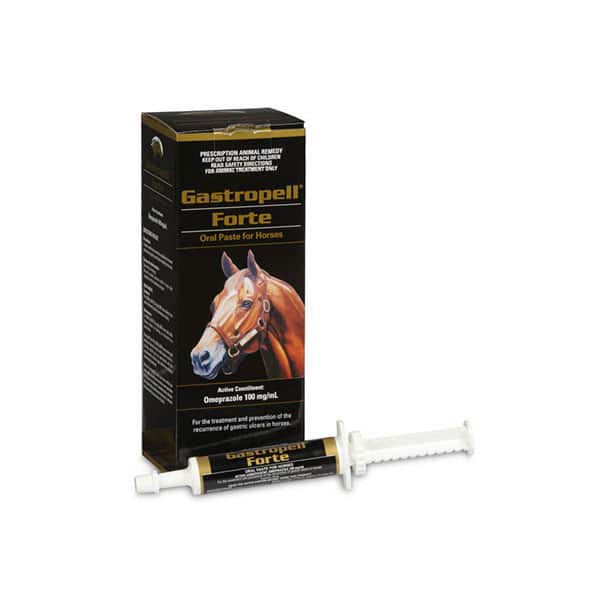
ACVM Registration No. A010775.
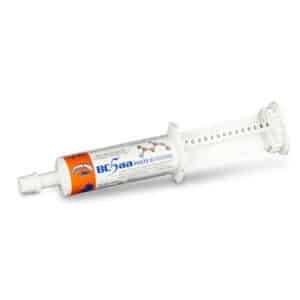
Gastropell Forte contains omeprazole, a dose-dependent inhibitor of gastric acid secretion. Clinical trial data indicates Gastropell Forte will inhibit gastric acid secretion to maintain gastric acidity at a non-aggressive level, which allows existing squamous ulcers to heal within 2 weeks of commencing treatment, and that a reduced daily dose will aid in preventing the recurrence of ulcers.
Precautions
Veterinary attention should be sought immediately for horses exhibiting acute clinical signs such as colic or anorexia. Seek veterinary advice if clinical signs worsen or no response is seen within 7 days of commencing treatment. If used in performance animals, regulations of relevant authorities regarding medication should be observed.
Directions for use
By law, the user must take due care, obtaining exert advice when necessary, to avoid unnecessary pain and distress when using the product other as directed on the label. Administer once per day on an empty stomach (e.g. first thing in the morning). Withhold the morning feed post dosing for at least 30 minutes.
ADULT HORSES:
Treatment: 10mL/500kg BW (2.0mg/kg BW) once daily for two weeks, followed by preventative dosing.
Prevention: 5mL/500kg BW (1.0mg/kg BW) once daily for 28 days, or longer as directed by a veterinarian.
Gastropell Forte at 10mL/500kg BW can provide rapid healing of squamous ulcers within 2 weeks while horses remain in training. When treatment ceases, if management changes have not been implemented to reduce ulcer risk, they may recur with the severity observed before treatment. Clinical data indicates that regular daily preventative dosing at a reduced rate aids in the prevention of recurrence of ulcers.
Feeding and management practices are associated with the development of squamous gastric ulceration in horses. Seek veterinary advice regarding modifying practices to reduce ulcer formation where possible, e.g. increase intake of roughage, feed palatable long-stem fibre before exercise to minimise acid splash, and exercise when stomach pH levels are high (e.g. in the afternoon after access to appropriate roughage all day or after omeprazole administration and subsequent feeding), reduce non-structural carbohydrate intake to <1g/kg/meal and change exercise regimes to reduce the quantity of exercise (at a trot or faster) per training and cumulatively over the week.
Actions
Omeprazole is an inhibitor of gastric acid secretion. It inhibits the acidsecreting proton pump within the gastric mucosa of the stomach by blocking the finalstep of acid production. Even though it is dosed orally, omeprazole, a pro-drug, does not act directly on the stomach fluid as it is ingested. Instead, it passes through the stomach to the small intestine, where it is absorbed and travels via the bloodstream to the acid secreting cells of the stomach. Here it is converted to its active form. Omeprazole’s absorption is impacted by the presence of food in the stomach. To reduce this effect, administer first thing in the morning and prior to feeding when the horse’s stomach is naturally at its emptiest. It is recommended that horses are fed no sooner than 30 minutes post-omeprazole administration but before exercise. The antisecretory effect of omeprazole causes a dramatic reduction in the acidity of the stomach fluid within hours of commencing treatment. Because the gastric fluid is no longer irritating to the stomach lining, ulcers then heal spontaneously. Continuation with reduced daily dosing can prevent ulcers from recurring.
Gastric Squamous Ulcers
The squamous mucosa in the upper region of the stomach has limited inherent protection against gastric acid. Frequent or extended exposure to acidic gastric fluid can erode the squamous mucosa, causing thickening that can progress to ulceration within days to weeks. Key causes of increased exposure to acidic gastric fluid included prolonged durations without feed (especially roughage), long-duration exercise, and extended transport. Diets high in non-structural carbohydrate also increase the risk of squamous gastric ulceration.
Clinical signs associated with squamous gastric ulceration in adult horses include inappetence or decreased appetite, recurrent colic, poor hair coat, unexplained weight loss, poor performance, and aversive behaviour. Accurate diagnosis of gastric ulceration in horses requires endoscopic observation of the gastric mucosa.
Safety
An adverse interaction between omeprazole and non-steroidal antiinflammatory drugs (e.g. phenylbutazone, flunixin) has been reported. Veterinary consultation should be sought prior to administering omeprazole concurrently with other medications. Omeprazole has a wide safety margin. Safety of omeprazole has not been established when used for longer than 91 days.
Withholding Period
It is an offence for users of this product to cause residues exceeding the relevant MRL in the Food Notice: Maximum Residue Levels for Agricultural Compounds.
Horses producing meat or offal for human consumption must not be sold for slaughter either during treatment or within 63 days of last treatment.
Safety Directions
May irritate the eyes and skin. Avoid contact with eyes and skin. Wash hands after use. Omeprazole may possibly affect the gastrointestinal tract. Handle the product with care to avoid oral exposure
Storage & Disposal
Preferably dispose of product by use. Otherwise dispose of product, packaging and waste at an approved landfill or equivalent facility.
Store below 30°C (Room temperature).








Reviews
There are no reviews yet.