










Every September I notice the same thing. The days get longer, the grass starts growing like mad, and my inbox fills up with messages from worried owners saying, “My dog won’t stop scratching!”
If that sounds like your house right now, you’re not alone. Spring is one of the busiest times of year for itchy dogs in New Zealand. The good news is that once you understand what’s going on, there’s plenty we can do to get your dog comfortable again.
In this article, I’ll walk you through why spring can set off itching, how to tell seasonal allergies apart from fleas, food reactions and skin infections, and what treatment options are available.
Why Can Spring Trigger Itching in Dogs?
Yes, dogs can get seasonal allergies, just like us. The difference is that while we tend to get runny noses and sneezing, dogs usually show it through their skin.
The medical name for environmental allergies in dogs is atopic dermatitis (or atopy). Dogs with atopy have an immune system that overreacts to everyday things in the environment, and a skin barrier that isn’t quite as strong as it should be. This lets allergens get into the skin more easily, which triggers inflammation and that relentless itch.
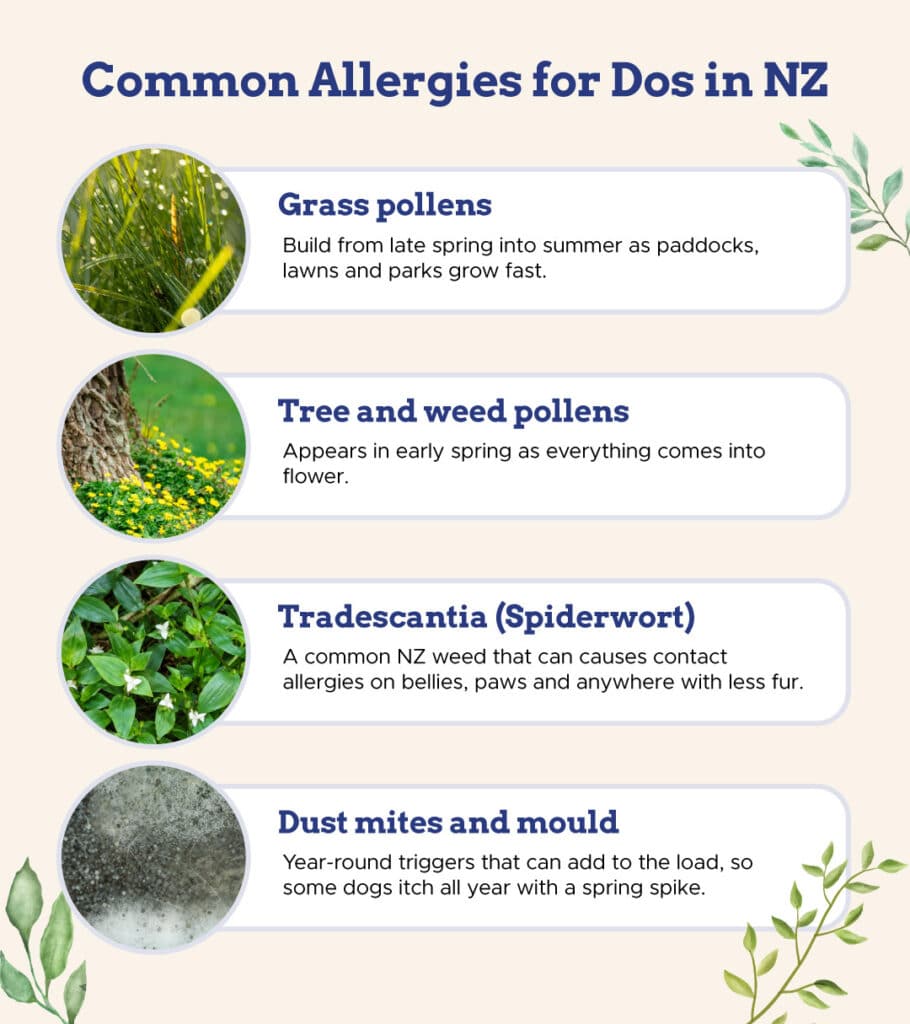
In spring, the common culprits here in New Zealand include:
- Grass pollens, which build from late spring into summer as paddocks, lawns and parks grow fast
- Tree and weed pollens in early spring as everything comes into flower
- Tradescantia (Spiderwort), a very common NZ weed that causes contact allergies on bellies, paws and anywhere with less fur
- Dust mites and mould, year-round triggers that can add to the load, so some dogs itch all year with a spring spike
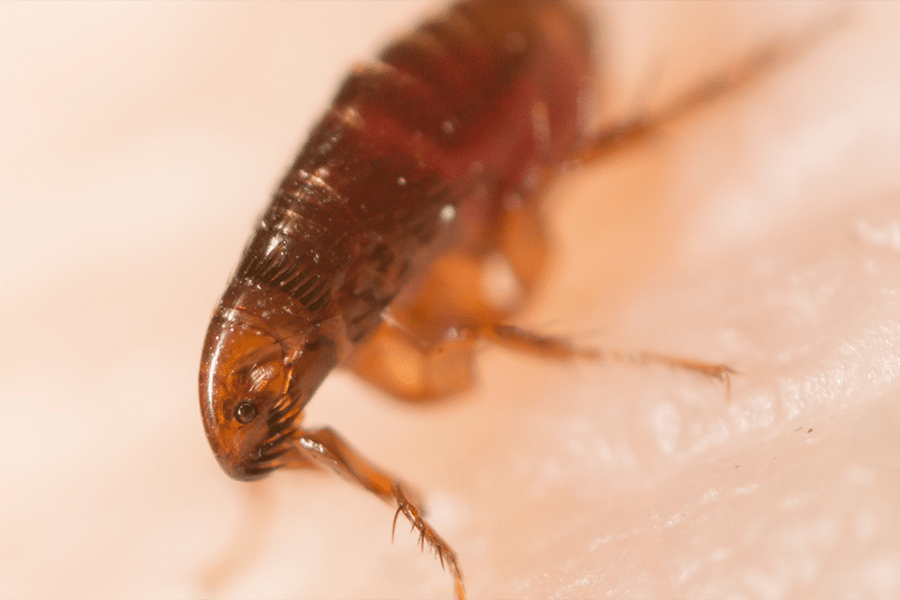
Spring also brings a second problem. As temperatures rise, flea numbers increase quickly, and many allergic dogs are also sensitive to flea bites. So an itchy spring dog can have more than one thing going on at once.
Most dogs with environmental allergies start showing signs between 6 months and 3 years of age, and it often gets a little worse each year if it isn’t managed.
Some breeds are more prone, including Labradors, Golden Retrievers, West Highland White Terriers, French Bulldogs, Staffies and Shar-Peis, but any dog can be affected.
Common Symptoms of Seasonal Allergies in Dogs
Dogs are very good at telling us they’re itchy; we just need to know what to look for. Here’s a quick checklist:
Spring allergy symptom checklist:
- Licking or chewing their paws (look for rusty brown staining between the toes on light-coloured dogs)
- Scratching at their face, ears or armpits
- Rubbing their face along the carpet, couch or grass
- Red skin on the belly, groin, armpits or inside the back legs
- Recurring ear infections, head shaking or smelly ears
- Watery eyes or rubbing at their eyes
- Hair loss or thinning coat in itchy areas
- Darkened or thickened skin (usually a sign it’s been going on a while)
- Restless sleep because they’re up scratching at night
- Symptoms that seem to come back around the same time each year
If you’re ticking a few of these boxes, especially the paw licking, face rubbing, and ears, environmental allergies are a real possibility.
Is It Allergies, Fleas, Food or Infection? Clues your vet will consider
Itchy skin can have several causes, and they often look very similar. Here’s a guide to help you tell them apart:
| Seasonal (environmental) allergy | Fleas/flea allergy | Food sensitivity | Skin infection | |
| Timing | Flares in spring and summer, may improve in winter | Worse in warmer months but can happen year-round | Year-round, no seasonal pattern | Can appear any time, often follows another itchy problem |
| Where it’s itchy | Paws, face, ears, armpits, belly | Lower back, base of tail, back legs | Ears, paws, bottom, face | Anywhere, often in skin folds or itchy areas |
| What you might see | Red skin, paw staining, face rubbing | Fleas or flea dirt (black specks that go red on wet paper) | Itching plus sometimes soft poos or tummy upsets | Pimples, scabs, crusts, greasy skin, a yeasty or unpleasant smell |
| Usual first step | Vet check, skin support, allergy management | Effective flea treatment for all pets in the house | Vet-guided elimination diet trial (at least 8 weeks) | Vet exam, possibly skin cytology and medicated shampoos or medication |
One important thing to remember: these problems often overlap. An allergic dog scratches, which damages the skin, and bacteria or yeast move in and cause an infection. Infections are itchy too, so the cycle keeps going. That’s why it’s so important to rule things out properly rather than guess.
For more on spotting fleas, have a read of our How to Spot Fleas on Your Dog guide.
Safe First Steps You Can Take at Home
While you’re waiting to see your vet, or if your dog’s itch is mild, there are some simple things you can do to help.
- Make sure flea treatment is up to date
This is always my first question with an itchy dog. Even if you haven’t seen a single flea, treat every dog and cat in the house with an effective flea treatment your vet recommends. Fleas are very good at hiding!
- Wipe paws and belly after walks
A quick wipe with a damp cloth after time on the grass helps remove pollen before it has a chance to irritate the skin. It’s a small habit that can make a big difference. Allerderm foam can be useful for on-the-go cleansing.
- Pick a gentle, soothing shampoo
Regular bathing washes allergens off your dog’s coat and calms irritated skin. A soothing shampoo like Allermyl Shampoo cleanses, soothes and moisturises while helping maintain the skin barrier and its natural microbial balance. Avoid human shampoos, as they can dry out and upset your dog’s skin.
- Keep an eye on Tradescantia
If your dog’s belly and paws are red after time in the garden, have a look for Tradescantia around your property and consider pulling it out (bag it rather than composting, as it regrows from small pieces) or fencing off those areas.
- Wash bedding regularly
Hot washing your dog’s bedding weekly helps reduce pollen, dust mites and flea eggs.
- Support the skin barrier
Omega-3 fatty acids can provide additional support for healthy skin and coat condition. An omega-rich supplement such as Nuvetra™ Advanced Joint and Skin Support can be a useful part of your dog’s skin-care routine alongside any treatment your vet recommends. You can also explore our skin and coat range for options.
Please don’t give your dog human antihistamines or other medications without checking with your vet first. Some contain ingredients that are harmful to dogs, and the right dose varies a lot.

How Your Vet Diagnoses Seasonal Allergies
There’s no single quick test for environmental allergies. Instead, your vet will work through a process of ruling out other causes.
This usually includes:
- A full history, including when the itching started, where it’s itchy and whether it happens at the same time each year
- A thorough skin exam, looking at the pattern of itching and checking for fleas
- Skin cytology (tape strips) and skin scrapes, to check for bacteria, yeast or mites
- Ear checks, as ear infections are very common in allergic dogs
- Diet trials, if a food allergy is suspected
- Allergy testing (blood tests or intradermal skin testing), usually for dogs with ongoing allergies where long-term immunotherapy is being considered (these tests don’t diagnose allergies on their own; they help choose what goes into the immunotherapy)
It can feel like a bit of a process, but getting the right diagnosis saves a lot of time, money and frustration in the long run.
Treatment & Skin Support Options
The aim with seasonal allergies isn’t usually a cure. It’s about keeping your dog comfortable, controlling flare-ups and protecting the skin. Most dogs do best with a combination approach, and your vet will tailor a plan to suit your dog.
Anti-Itch Medication
There are some excellent modern options for allergic itch, including prescription medications that target the itch signals in your dog’s body. Your vet can talk you through what suits your dog and prescribe the right treatment, which you can then order online through our veterinary pharmacy. For more information, contact our team at pharmacy@vetpost.co.nz.
Medicated Shampoos
If your vet finds bacteria or yeast on the skin, they may recommend a medicated wash such as TrizChlor 4 Shampoo, which contains chlorhexidine to help manage skin infections. Always follow your vet’s advice on how often to use it.
Treating Infections
Skin and ear infections need to be cleared up properly, and your vet may prescribe antibiotics or antifungals to treat them. It’s important to finish the full course as prescribed by your vet, even if your dog seems better.
Skin Barrier Support
Omega-3s, skin-supportive diets and regular gentle bathing all help support the skin barrier over time.
Immunotherapy
For dogs with year-on-year allergies, allergen-specific immunotherapy (sometimes called allergy shots or drops) can help retrain the immune system. It takes time to work, but it can reduce reliance on medication long-term. Speak to your vet about whether this is a good option for your dog.
Consistent Flea Control
Year-round flea prevention is a must for any allergic dog. Even one flea bite can set off a flare in a flea-allergic dog.
When Does an Itchy Dog Need Urgent Vet Care?
Most itchy dogs aren’t an emergency, but some signs mean you should see your vet as soon as possible:
- Sudden swelling of the face, lips, eyes or muzzle
- Hives (raised bumps) appearing quickly over the body
- Any difficulty breathing, collapse or weakness
- Open, weeping, hot or painful areas of skin (like hot spots)
- A very sore, swollen or smelly ear, or head tilting
- Your dog is off their food, lethargic or seems unwell
- Itching so bad they’re breaking the skin or can’t sleep
Sudden facial swelling or breathing difficulty can be a sign of a serious allergic reaction, for example to a bee or wasp sting, which are also common in spring. Please contact your vet or nearest after-hours clinic straight away.
Frequently Asked Questions
Can dogs get seasonal allergies in spring?
Yes. Many dogs are allergic to grass, tree and weed pollens, which peak in spring and summer in New Zealand. Instead of sneezing, most dogs show it through itchy skin, paw licking and ear problems.
What are the signs of pollen allergies in dogs?
The most common signs of a pollen allergy are licking or chewing the paws, rubbing the face, scratching the armpits and belly, red skin, and recurring ear infections. Symptoms often return around the same time each year.
How can I help an itchy dog at home?
Keep flea treatment up to date, wipe paws and belly after walks, bathe with a gentle soothing shampoo, wash bedding regularly and consider omega-3 support. Avoid giving human medications unless your vet has recommended them.
How are seasonal allergies in dogs treated?
Treatment usually combines anti-itch medication (such as an anti-itch injection from your vet or daily tablets), treating any skin or ear infections, medicated or soothing shampoos, skin barrier support and strict flea control. Some dogs benefit from immunotherapy.
When should my itchy dog see a vet?
If the itching lasts more than a week or two, keeps coming back, or you see broken skin, smelly ears, scabs or hair loss, book a vet visit. Sudden facial swelling or breathing difficulty needs urgent care.
Get Ahead of Your Dog’s Seasonal Allergies
Seasonal allergies can be frustrating for both dogs and their owners, but they are very manageable. The key is to work out what’s actually causing the itch, treat any infections, and put a plan in place before the worst of spring and summer hits.
If your dog has been itchy around this time in previous years, now is a great time to chat to your vet and get ahead of it. For more seasonal tips, check out our Top 5 Spring Healthcare Tips for Your Dog.
This article is for general information only and isn’t a substitute for a veterinary examination. Always speak to your vet about your dog’s individual health needs.
Author: Dr Rebecca Walker, Veterinarian, known as Dr Becs.